Thursday, June 9, 2011

Women are Jews, too.

I recently found out that the Conservative synagogue in Bogotá doesn't allow women to read from Torah or wear tallit. Oh, did I mention that I'm the coordinator for a 5-day Jewish summer camp for the synagogue starting next week?

Brief explanation: For you non-Jews out there, I should give a brief background on what this means. First, some vocabulary. Torah = the five books of Moses, that scroll thingy that you saw your friends read from for their Bar/Bat Mitzvah. Tallit = Prayer shawl that is worn during morning prayer services, at weddings, and a few other times. In the vast history of the Jewish people, women were not allowed to read from the Torah or wear tallitot (actually, according to Wikipedia, originally women were allowed to wear tallitot until the Medieval period? I should probably do some more research on this), but that changed for the Reform and Conservative movements at some point in recent history. OK now back to your regularly-scheduled blog post...

Me being my naive self, seeing that men and women sit together at services, seeing that women serve on the synagogue board, etc etc - well, I just assumed that women could read from Torah and wear tallitot. Turns out I was wrong. So, me (again) being me, kind of freaked out. I've been struggling with the question of whether or not you can belong to a community that doesn't accept you for who you are - and more specifically, whether you can be part of a Jewish community that doesn't recognize the way that you practice Judaism. You probably know that I'm into egalitarianism in general, and in my Jewish life, grew up in a congregation that had a female rabbi and that didn't differentiate between men and women in any way (other than the brit milah). Not to mention, Conservative synagogues in the US allow women to perform these mitzvot, so why not here?

Turns out I'm living in Latin America. See previous post about sexism.

There are a few people at the synagogue who are working on this, but it takes time. And so many people, including women, are stuck on "tradition" - the same people who openly express wanting to allow pork in the synagogue, the same people who didn't raise their children as Jews. **Addendum: I don't care if you eat pork or don't raise your kids as Jews. But then don't go telling me which traditions I should think are important and which traditions should change.** Why is it that the sexist traditions are always the last to change?

I don't want to impose my beliefs on others - if a woman doesn't want to wear a tallit, my goodness, she should not have to wear a tallit. But if a woman wants to wear one, well, she should have that right. Especially in a synagogue where women count as part of a minyan, where women serve on the board, where women are an integral part of the religious aspects of the community.

I just remembered from my childhood the pictures of all of Temple Emanu-El's past presidents on the wall. I remember a sea of male faces, with one female face, how that always stuck with me. I was always proud of her.

**Addendum, June 10** Just saw this cartoon and think it applies.

Yes, I have heard it

Los ismos

The way racism and sexism are dealt with here is completely different from the way it's addressed in the US. There's a black girl on my ultimate frisbee team who is almost exclusively referred to as la negra - of course, me being me (read: I hate offensive/racist jokes, stereotypes, etc. Just ask my husband.), I am always taken aback by this. Why is it that someone should be branded as different because of the color of her skin? Today I asked Evelin what she thought about racismo - she responded by saying that when she was younger it bothered her that people would call her negra, but now she's used to it. "I mean, I'm black. So people are going to call me negra. That's just how it is."

Today I talked for a while with Doris, the woman who comes about twice monthly to clean our apartment. She's told me in the past about her marido (in this case, long-term, live-in manfriend, though this term can also refer to a husband), how he was caught kissing another woman in a bakery, how he doesn't help out at all around the house. When I've asked her about why she doesn't leave him, she pretty much says that she can't afford rent without him (which, of course, with my guilt complex makes me want to pay for her rent, but know that's not possible). Today I was asking her if she thought machismo was a problem in Colombia. She responded with a resounding yes, that there are so many men who beat their wives, that there are women who choose everyday to stay in these relationships. She said that one time her marido hit her, and she went straight to the district attorney's office and reported him. He then had to pay her $200.000 pesos (~$100) in front of a judge and hasn't touched her since.

If you ask anyone in Colombia about racismo or machismo here, they will talk with you openly about it. They're both widely accepted as being a central aspect of this society - and people talk about them as if it's nothing. A black woman is called negra, an Asian-looking person is called chino, a woman is expected to do the cooking in her house. At least with what I have seen, few people challenge these accepted notions - including those who are on the receiving end of the stereotype or expectation (in other words, more than half the population). On the one hand, I can't stand it, even though I know that people have never seen anything else, and thus probably have no idea that another possibility exists. On the other hand, I appreciate that at least it's out in the open - perhaps in the US the same amount of prejudice exists, but it's not called by its name.

Though I must admit, living abroad has certainly made me begin to look at the US with rose-colored glasses. As people shove their way onto and off of the Transmilenio I think, "People in the US are so polite when it comes to public transportation!" Or when people don't help me clean up after a dinner party I think, "In this US, my friends would've helped me wash dishes!" The same way of thinking applies to my views on sexism and racism in the US. I like to think that these issues aren't as bad over there, but then I watch things like this or listen to things like this and am reminded that the US still has a long way to go, too.

The question is, how do we fight for these things every day?

It's people like Doris, people who in their small corner of the world say "No. The way things have always been does not have to be the way that things always will be." Maybe she can only take it so far, but she can do something.

What are your thoughts - do racism and sexism exist where you live? How do people talk about it? Are these things that are worth fighting against, and if so, how do you do that? If not, why?

Friday, May 27, 2011

Visits, leather, and cooking

Leather class has been a lot of fun. So far, I've made the simple little wallet (turned out GREAT), and I'm currently working on a leather kindle case. So far it looks really good; I should have it finished by mid-next week, and I'll put up photos of all are early artistic endeavors. Yesterday we went down to tanneries to check out the leather making process and buy leathers/supplies. Percy, one of Cesar's friends/students, is here for a month from Mexico to visit his girlfriend, and wanted to stock up so that he could continue his commercial leather projects over in DF. His specialty is leather backpacks, and he has a really cool rucksack that I'm going to try to copy... Robin bought some purple leather to make her mom a big, and we bought some goat skin suede to use for bag linings (about 8 bucks for a piece of suede maybe 1.5 m x .7 m). I'm going to go back next week with Cesar to buy some dark brown leather for a briefcase/attaché I want to make. Maybe I'll see if I can get some shell cordovan to use too... that could be fun, depending on prices.

The tanneries were the foulest-smelling things I have ever visited in my life. Think chopped liver left on the counter for years and years and years. Didn't make me become a vegan, though. I'm just glad that I don't have to work down there.

Speaking of food, Robin and I have decided to resurrect an idea that we were kicking around a few months ago: an underground/pop-up restaurant run out of our apartment along the lines of this place, though instead of Indian food, it's just going to be "random recipes/cuisines that Jerry decides to try." I'm thinking of trying some soul food for the first installment. Any recipes you want to kick my way?

Lastly, my brother's visiting us next Friday! Hopefully we'll have some good pictures to post from that trip.

Saturday, May 21, 2011

Stuff I want to make

Robin and I recently started some leather classes at a little leather shop nearby. Our old roommate Lee took the classes, and when she left, Robin offered Cesar (the owner) a deal: she'd give him English classes, and in exchange, she'd get the course for free. During her second class, Cesar mentioned that he wants someone to practice French with. So, now Cesar and I have an arrangement exactly like the one with Robin: we do the leather classes in French, and in exchange, I don't pay a dime.

I've been scouring the Internet for things I want to make, so I'll copy-paste some of my favorites. If you have any suggestions/ideas, feel free to email them to me.

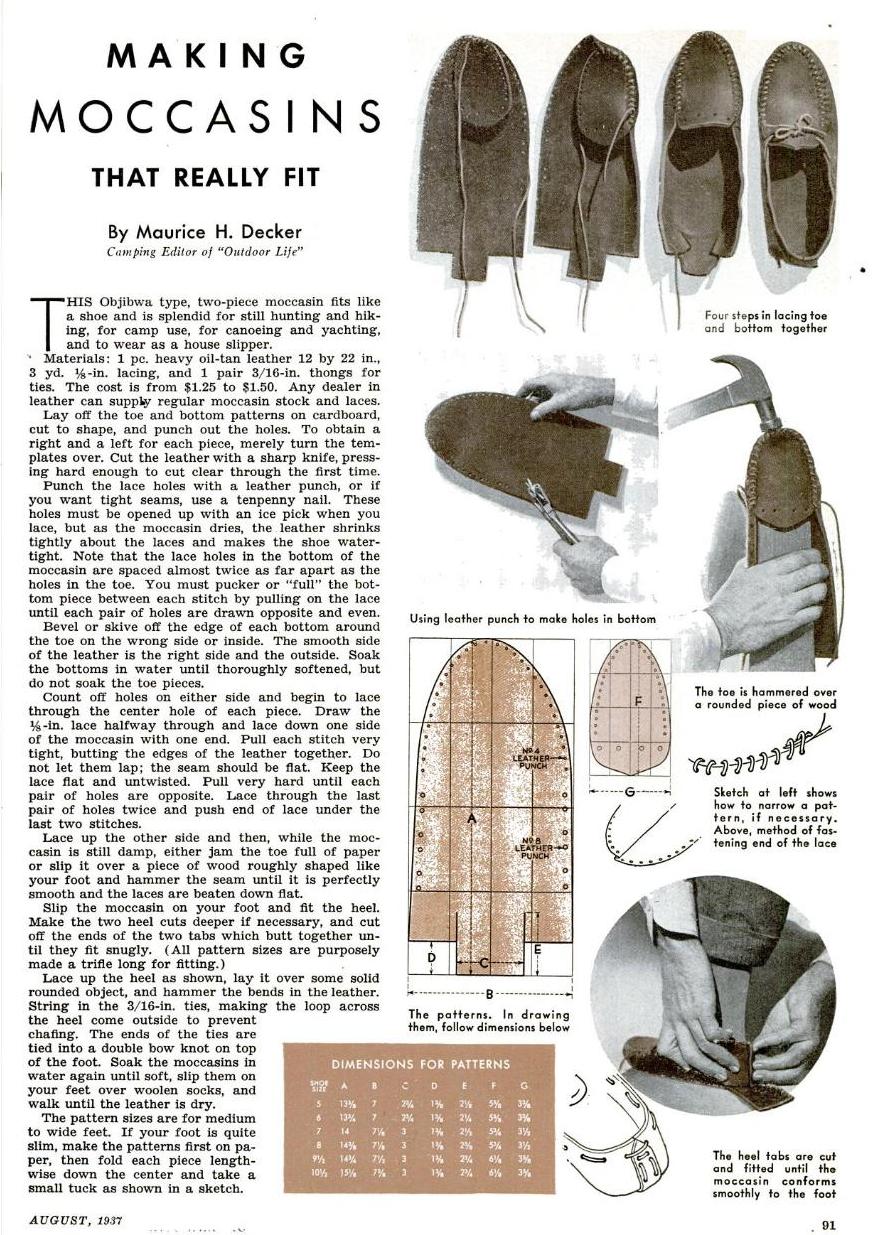
Moccasins


Tefillin - Technically, this is Robin's project, but it was my idea. This is the project that is least likely to be completed. Making tefillin is pretty complicated...


Wallet - This is what I'm working on right now. I'm actually heading over in 45 minutes to finish it up. A simple, very basic card holder/wallet. We'll see how it turns out.


Machete and Sheath - These are my Dad's, from his time in Colombia. I have memories of sneaking into my Dad's closet when I was a kid and playing with his machetes and Colombia kitsch. This doesn't look too hard to make, so I'm going to give it a shot. I think it would be a badass wedding gift, maybe with some colorful Guajira fabrics tied on, but Robin disagrees. She thinks that we should buy gifts off the registries.


Briefcase/ Messenger Bag - Cesar already has a couple of bags similar to this one, so I'll probably just copy his designs ather than try to recreate this one off the Internet.


Bike bag - This one looks pretty doable and practical. Biking in Bogotá can be done, but with the never-ending monsoons and psycho drivers, it's a little dangerous. I share a bike with our roommate, but I only take it out on Sunday mornings, during the Ciclovía.


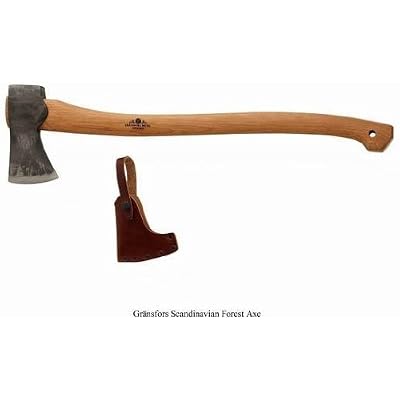
Axe head cover - If someone wants to buy me an axe, I'll make the case. Deal?
I

New Roommate

So, the third bedroom in our apartment has been something of a merry-go-round. We've had one Gringa, Lee, who sadly left us after about 3 months to return to her job in D.C. After Lee, we had Lizette, a Colombian expat who returned to Bogotá after 10 years in Europe to do some research for her thesis. Then my Mom came and lived in the room for 5 days.

We were out of options. Two brits had responded to our posts, but their interest was lukewarm, and they backed out. Thankfully, finally, we found someone. She's Colombian, from Baranquilla, and the BEST part is that she works for SAB Miller, the multinational beer conglomerate. She gets free beer. Seriously. This morning she asked if we wanted to go with her to the office (2 blocks away) to pick up a couple cases. AMAZING - Best. Roommate. Ever.

Tuesday, May 17, 2011

Bad-ass barbers

So, I finally found someone to cut my hair who does a better job than my Mom. There's a little hole-in-the-wall barbershop a few blocks from our apartment, run by a set of twins who're probably in their late 40s (they also both have my brand of male pattern baldness). While I was getting my hair cut by one twin, his brother was reading an article from El Tiempo about this man. Apparently he's famous even in Colombia. The article was ridiculing him for being full of shit, and I happily agreed. Discussing the Republican presidential primary while getting your hair cut for $3 in Bogotá. Amazing.

Tolochko-san

Naming conventions in Colombia are slightly different from what we're used to. Here, people have two first names and two last names. People also use their first two names interchangably - it's still unclear to me if there are any kinds of general trends. Whether pepole tend to use their first name with their family and close friends, their second first name at work/later in life, etc.

Either way, whenever Robin or I are waiting to be called into someone's office, we are almost always called by our middle names. My guess is that it's because, for a Colombian, Carol and Jack are easier to pronounce than Robin and Jerome.

Today though, something truly wonderful and Colombian happened to me. I showed up to the doctor's office, and after waiting for 30 minutes to be called into the office after my schedule 10:10 appointment time, asked the other people waiting around what was up. One woman looekd at my appointment slip and said that my name had already been called, but the doctor, unable to pronounce my name and convinced that my last name must be Japanese, just yelled out, "Chino! Chino? Chino!" Hence the confusion.