Monday, November 21, 2011

Sí, soy gringa

I can't count the number of times I have had this conversation:

Cab driver: Where are you from?
Me: The United States.
C.D.: Really? You don't look like you're from the States.
Me: Yeah, we're not all tall, blonde, and fat.

You would be amazed by how many people here honestly believe that all Americans fit the above description (or at least the tall and blonde part). I love educating Colombians by explaining that one of my favorite aspects of American culture is that we are a mix of all types of people. That continues to be a reason why I want to ultimately live in the U.S.

Tuesday, November 15, 2011

Home.

This idea doesn't exist in the Spanish language. You could use the word hogar, but it's not quite the same.

Home is a concept that I have grappled with over the past few years. Atlanta stopped feeling like home as soon as I left it (caveat: my parents' house and neighborhood still feel like home, but in a different way). I suppose that Athens felt like home, though I don't have memories of actively thinking about it as such. And D.C. immediately felt like home for some inexplicable reason. But Bogotá - well, it took a while.

Perhaps it was because we came here with no plan in mind - no end date, no friends, no jobs, no sense of belonging. We came more for the language and the experience rather than the place. There are things that I actively dislike about where I currently live: the pollution, the traffic, the rain. Many times over the past year or so, I wondered if I would ever come to think of Bogotá as home. I couldn't accept it - part of me always saw home as describing a place that you could see yourself living in for a long time, or coming back to. Having an indescribable emotional connection to a place. Though I have enjoyed all of our time here, I didn't feel any sentimentality about this place.

Until I just came back from a two-and-a-half-week trip to the U.S.

Arriving in the Bogotá Eldorado airport felt like coming home. Taking the taxi cab to my place, laughing at the forever under-construction road. I walked up to my apartment to discover that my roommates had accidentally locked me out and I would need to find another place to sleep that night.

Walking down the street to figure out what I was going to do, I passed by Juancho's apartment. I knocked on the window and he let me in. And that's when I realized - this city is my home. I could walk down the street, knock on a door, and feel completely at ease.

Riding the bus down the Séptima yesterday, I felt sentimental. This city has its problems, but they're my problems. I can hate on it, but if someone not from Bogotá starts to hate on my city, I will get pretty upset. I'm more interested to see what Bogotá's mayor-elect does with his position than Atlanta's or D.C.'s mayors. I'm worried about the construction near our house and how it will affect my commute. I'm going out for a friend's birthday on Friday. Nothing has actually changed from before I went to the U.S. until now other than my perspective.

I realized that "home" doesn't have to be something permanent or long-term. I don't plan on or want to live in Bogotá forever. I don't see us moving back here in the future after we ultimately move away. But right now, this is where I belong.

Sunday, November 6, 2011

Reality TV stars

It's been Facebook-official for a while now, but I realized that we still had yet to write a blogpost about it: Robin and I are going to be on TV. Specifically, an episode of HGTV's House Hunters International is going to feature US in Bogotá. Apparently our lives are just so cool that couldn't help but have an episode about us (that and the fact that are apartment's amazing). I'm going to write a bit about the filming process, which is going to take place over the next month, but I first want to send out a SPOILER ALERT for those of you who still believe in Santa Claus, the Easter Bunny, and reality television.

The show is flying us to Atlanta to film the "before" section of the episode. Robin's already in the 'States, and I fly in this Wednesday. Please send me an email if you'd like to get together. A couple weeks after filming in the U.S., their film crew is coming to Colombia to recreate our apartment-searching process. For those of you who live in Bogotá, that 3-day filming schedule includes a Sunday afternoon (Dec. 4) dinner party at our apartment. I haven't yet decided what to cook, but I'm thinking leg of lamb will definitely be on the menu.

Lastly, I have a favor to ask y'all: in all likelihood, the episode will not air in Colombia for several years. Thus we would really appreciate it if one of our technically-savvy readers could find a way to record and dropbox us a copy of the episode.

Saturday, October 8, 2011

Book of Life

Throughout the course of Yom Kippur, we repeat ten times this confession of a series of sins. It is a powerful prayer; each time you recite a sin, you beat your hand on your chest. There are a lot of sins on the list, but here are a few:

For the sin which we have committed before You by hard-heartedness.
For the sin which we have committed before You under duress or willingly.
For the sin which we have committed before You knowingly or unknowingly.
And for the sin which we have committed before You with a timid heart.

The rabbi's sermon last night on Kol Nidre (the holiest night of the Jewish calendar, the night of Yom Kippur, the Day of Atonement) focused on the last line, the last of the series of sins. He talked about the true meaning of courage - which does not mean lack of fear but rather not letting your fears get in the way of doing what you want to do or being yourself. "Don't let other people's opinions control who you are," he said. And so, I listened.

Today, I wore my tallit to services. What's funny is that simply being myself in the synagogue is, in itself, an act of subversion. I've covered this theme before. Except last night, listening to that sermon, I came to a different conclusion. I decided that I was not going to let other people decide for me who I will be. I will be myself. I will not be dogmatic in my views, nor will I let others' dogma determine my behavior.

And you know what? No one said anything to me. No one walked out of services because of me (that I know of).

Of course, this all isn't really fair. I'm clearly gringa and I clearly would use that to my advantage if anyone approached me about it. Yes, well, this is the tallit from my Bat Mitzvah. I was raised in a Jewish community that allows women to wear tallit and I am following the Jewish traditions that I was raised with. Colombian women would not have it so easy. But that's another issue. I can be myself. And I should not let timidity of the heart get in the way of that.

And today we both fasted. For the first time in... well, who knows, if ever. And we went to services all day. I'm talking about allllll day, minus a 2-hour break between Musaf and Mincha when we went and sat in a park. It felt surprisingly good, and not as hard to fast when you're not at home tempted by what's in the cupboard. I feel fresh and ready to start this year at full-speed.

We broke the fast at the house of some new friends. Most of the people there are in the current conversion class. They were all so warm and insightful and open and of all ages. Two of the guys realized that they are second cousins, and we all watched in wonder as they exchanged family stories. Today was full of community, the thing that I have most missed in Bogotá.

I don't remember the last time Yom Kippur was this meaningful.

Saturday, October 1, 2011

L'shana tova u'metuka

Looking back on this past Jewish year, I couldn't be any more pleased with where we are now. We moved to Colombia a little more than a year ago with nothing but each other, our savings, and a Google Doc of about 20 people we should call when we got here. We spent last Rosh Hashanah mostly to ourselves, attempting to go to the Orthodox synagogue here while feeling completely detached from that community (read: mehitzas make me really uncomfortable). This year, we spent the first night of Rosh Hashanah dinner with some good friends (not Jewish) at our apartment and the second night at the house of some other good friends (Jewish). Sometimes I get sad or nostalgic about living far away from my dearest friends, and then I remember that we really do have communities here. We have built something from nothing, and that is something I will take with me wherever we go. Not to mention which, our relationship with each other has grown - the only downside being: what we will do when both of us have full-time jobs that don't have flexible hours and we can't spend hours just hanging out?

First night of Rosh Hashanah with our round challahs!

Much has happened this year - our nephew, Davis, was born on Rosh Hashanah to usher in a great 5771. Jerry and I both became completely fluent in Spanish. We backpacked for 7 days. We went to Ecuador and traveled around Colombia. We started doing yoga regularly. Lots of wonderful people came to visit us. Jerry fell in love with his new hobby, marroquinería - leather-working. I got a ridiculously awesome job and for the past month, I have been making maps (links to come once I have something up on the internet).

Paso de la Sierra
Hiking at El Cocuy National Park

In the coming year, I'd like take more weekend trips. I'd like to dive head-first into my new job, let go of my fear of making mistakes and just learn. I'd like to deepen my friendships here and keep in better touch with people who I am not geographically near. I'd like to do more yoga and ride my bike more. I'd like to spend more time out on our terrace. I'd like to live more intentionally.


Robin Yoga
Yoga on the roof.

To all a healthy, wonderful 5772.

Sunday, August 21, 2011

Life

So, since my last post, our sabbatical in Colombia celebrated its 1-year anniversary. With this milestone came a some pretty amazing news: it's no longer a sabbatical. If we've learned anything from our time in Colombia, it's that nothing is ever 100% certain, especially if it involves a prospective employment opportunity. As such, we've been understandably hesitant to write a post on this until it became a little more "real."

Robin has a job! She's been talking with Colombian-based think tank CEELAT about a part-time mapping project for the past 6 months or so. Over the last month, that part-time one-off project got upgraded into a part-time-plus-bd-so-we-can-bring-you-on-full-time permanent position running a GIS lab for CEELAT. The job comes fully-equipped with benefits, computer, and visa(s)! I'll let Robin tell you more about the details of the job, but it's some pretty exciting news.

In related news, now that Robin's joined the Colombian elite, anyone got an old blackberry they don't need anymore?

Yaaaaay!!!! ... but what does Jerry think about this? I've heard plenty of people joke about kept manhood as the ideal life, but how many of them really feel that way? We've had a year of off-and-on futility in the Colombian job market (up until Robin's home run, of course); would I be happy with that for another 2 or 3 years? The short answer: yes (see previous post). Seriously, though, leather working's taken over my life... It's awesome. I spend all of my available free time at the workshop. It's tons of fun. Once I finish the latest bags that I've been working on, I'll finally take pictures of everything and put it up on flickr. To those people who are lucky enough to be receiving gifts when we head back to the US of A - all of the bags are looking beautiful.

On a slightly different level, some time before November we're going to roll out the Taller's entry into the U.S. market. Stay tuned for some serious Etsy-hyping.

Despite my love for leather, the job search hasn't ended. I recently took McKinsey's first round problem solving test and passed, but because we're leaving for Atlanta on Thursday, I'm missing the first round of interviews in the August/September batch. The good news is that I can still jump right into the interview rounds in November, and I get an extra 3 months to study. In either case the start date would be in 2012, so interviewing in November just gives me extra study time.

If that falls through, the plan is to continue with the leather working, add some woodworking classes, maybe learn how to build my own bike at the bike workshop, and possibly pick up a master's degree at the Externado or Los Andes.

See y'all in Atlanta! (and I promise that my next post will have photos)

Thursday, July 28, 2011

Leather (updated)

So, I haven't written a post about my leather-working exploits since the brief introductory one about two months ago. Since then, I've made a wallet that looks almost exactly like this, a Kindle case that's a little too small for my Kindle, a briefcase/messenger bag, and a tote bag. I'll get some photos of the tote bag and wallet up later this week, but for now, here are some shots of the briefcase:


In general, I think the bag turned out great.
Things I liked: The leather I picked looks awesome, and lining it in the navy blue suede was also a good choice. The shoulder strap also turned out really well. I incorporated some ideas from a couple different places to make my own thing, and it looks good.

Now, to be critical, I wasn't thrilled with the overall shape of the bag. I had to adjust the dimensions to make sure that it could fit our over-sized laptops, and I thought that I generally would want a bigger bag. The end result is that the bag is a bit more square instead of rectangular. Aside from that, though, I think it's awesome. Higher resolution photos are up on the flickr site. Stay tuned for pictures of my other creations...


Sunday, July 10, 2011

Proud to be an American

If you are from the U.S. you probably learned in elementary school that there are seven continents in the world: Europe, Asia, Africa, Australia, Antarctica, North America, and South America. You probably took this information at face value and never questioned it. It turns out that there is no one definition for what a continent is, and people all around the world learn different things in school. As it turns out, people in Latin America generally learn that what we refer to as North and South America - they refer to as one continent, America.

Which brings us to the debate I've had with people from various parts of Latin America for years, which you may have experienced yourself. Why do us citizens from the U.S. call ourselves "Americans?" I become passionately involved in this debate, and I will defend that term until someone changes the subject. Even if it's my Colombian friend's birthday and she insists she was taught that North America was comprised of the U.S. and Canada, Mexico was part of Central America, and then changes everything by saying that America is really one continent.

Really what this comes down to is that the name of our country is the United States of America. Goodness knows why our Founding Fathers (and Mothers? Who am I kidding, they surely didn't have a say in the matter.) chose that name, but así es (that's the way it is). What this really comes down to is a linguistic problem - Mexico is called the United States of Mexico, and its citizens are referred to as Mexicans. Colombia is the Republic of Colombia, and its citizens are Colombians. Of course, someone from Latin America may rebut that we were arrogant in the first place to choose the name of the continent as the name of our country, but what can we do about that now? There was probably a good reason behind it at the time - like, you know, these were the first independent states in America. And then the name stuck.

I am often referred to here as norteamericana - which profoundly bothers me. North America refers to not only the U.S., but several other countries, and I see it as more arrogant to refer to myself as a "North American."

So I will continue to call myself American in English, estadounidense or gringa in Spanish, and any host of other words in other languages.

Have you ever had this debate before? What's your take on it? What is your perception of how other people view this debate around the world?

Friday, July 8, 2011

Who is a desplazado?

I get in a cab in the other night and the driver asks if I know where I'm going. "I just started this job a couple of weeks ago," he says. He looks young, probably my age or even a little younger.

So I ask where he was from and why he moved to Bogotá. He had lived his whole life on a farm with his family in Tolima, the departamento (equivalent of a state) next to Cundinamarca (where Bogotá is). He says that the guerrilla has been there for a while and that there aren't many job opportunities there. Part of his family has already moved to Bogotá, and the other part is still on the farm. He doesn't seem to want to talk much about it, but it gets me thinking.

What does it mean to be displaced in this country, which has the highest number of internally displaced persons in the world? Is this man, or someone like him, counted among the 3.67 or 5.2 million desplazados (depending on who you ask) in Colombia? He was not forced off of his land, some of his family members still live there, but he chose to leave because of the dire economic and social situation. If you choose to leave under these circumstances, how much of a choice do you have?

Friday, July 1, 2011

The irbutz

Jerry and I aren't the traditional married couple. We both changed our names when we got married. Jerry's the more fashionable one, I'm the one who plays on a sports team. We quit stable jobs in a city we loved to move to Colombia.

And ever since we've been married, we have always lived with other people. Our reasoning is this: Jerry and I really love hanging out with each other and can tend to want to stay at home and hang out rather than go out. Living with other people is an automatic social life, it's cheaper, it's a great way to make really good friends and meet new people through your roommates.

We love this lifestyle and have thought about what we will do when we decide we want to have children. And then we realized - why can't we have our cake and eat it, too? On top of that, why can't we create the kind of Jewish community we dream of? Thus, our idea of creating an irbutz was born. Ir in Hebrew means city, and butz is taken from the word kibbutz, a form of communal living in Israel. [Side note: We didn't come up with the name or the concept, apparently there are Jews out there like us who have already done this thing.]

The idea is this: live together in a huge house in a city (Jerry's thought - buy an old embassy in DC) with a few other Jewish families. Have regular Shabbat dinners together, celebrate all of the Jewish holidays together, create a community.

Much of the reasoning behind this is our desire to raise our children within a Jewish community. In modern-day American Jewry, the center of Jewish life outside of the family is the synagogue - and while we believe that synagogues are important, we also believe that there should be Jewish communities available to Jews from all different backgrounds. Our irbutz would provide a Jewish home to the broader Jewish community of all ages - Shabbat dinners, Jewish discussions, movie nights, and holiday celebrations would all take place there.

This idea was also inspired by Moishe House, an organization that sets up group houses for 20-something Jews in cities all over the world. Their rent is subsidized in exchange for running events for young Jews in that city. The concept was that Jews in their 20s were falling out of touch with the Jewish community - beyond college, but not ready to join a synagogue. Moishe House is working to fill that gap. We see our irbutz as a natural extension of this concept, a community center that is open to people of all ages. We have also thought about pitching this idea to existing Jewish organizations (like Moishe House) to seek out funding.

There are lots of questions to answer, here are only a few:
  1. Who would we live with? How many families would live there? What are the guidelines for selecting who lives in the house?
  2. Where would we do this?
  3. What are the rules of the irbutz? What is shared? How would food work? How would money work for communal expenses? How do you resolve disputes? What are legal ramifications? How do we divide up chores?
  4. What exactly does it mean to make this home Jewish? This is obviously a question that comes up even if you aren't living in an irbutz. What do you do on a daily basis to make your home Jewish, to incorporate Judaism into your family life? Why is this important?
If you have any thoughts on more questions that need to be asked or general feedback on the concept, leave them in the comments. Also, if you know anyone who currently lives or has previously lived on an irbutz or someone who you think would be interested, please let us know!

Thursday, June 30, 2011

Jew Camp

I was a summer camp girl, my mother was a summer camp girl, my grandmother was a summer camp girl, and as it turns out, my mother-in-law went to the same summer camp that I went to. There's something special and sacred about sleepaway camp that is indescribable to those who have never experienced it (cough cough my husband... though I must give him props, he went to the first half of Jew Camp). I always wanted to be a summer camp counselor - but then college arrived, and there were always other, more enticing opportunities for my summers. I had accepted the fact that never having been a camp counselor would be one of my biggest regrets in life.

And then, I find myself in Bogotá, Colombia, somehow involved in the Jewish community. They desperately needed a coordinator for their 6-day camp, and I was a great fit - young, enthusiastic, with Jewish leadership experience. Despite its bumps, it was a great experience and I was able to shed my regret of never having been a camp counselor.

In many ways, Majané Hatikva (the name of the camp) was just like my camp experiences: teaching the kids how to play with their cups during meals, banging on the tables during Birkat Hamazon (prayer for after meals), sunburns, mosquito bites, shaving cream, walking around barefoot, bunkbeds, gossip, staying up late talking about life. In other ways it was completely different - after all, it's only 6 days, so the groups don't have the same amount of time to form their own identities. There was no singing in the dining hall, no lightning bugs, no huge open fields. But it was still camp.

Here are some highlights:

Singing the younger girls to sleep: When I was a kid, my mom used to sing me a song:
Robin's boat's a silvery moon
Sailing cross the sky
Sailing towards a sea of dreams
As the clouds roll by
Sail Robin, sail
Out across the sea
Only don't forget to sail
Back again to me
All of the girls were homesick (a case of mamitis), so I went into their room to sing to each of them. They loved it and would refuse to go to sleep every night afterwards until I'd sing to them. I started singing other songs, including my feminist version of Hinei Mah Tov:
Hinei mah tov u'manaim
Shevet achot gam yachad

Behold how good and how pleasing
Seven sisters all together. [usually it says brothers]
I had the girls sing it to Claudio, the rabbi. He laughed at my brainwashing.

My conversation with the teenage girls: One night I stayed up talking with the teenage girls about all sorts of things - boys, Judaism, life. I told them about my Bat Mitzvah, and about how there was a woman rabbi at my synagogue growing up, and how an Argentine woman rabbi was at our wedding. They all expressed that they would love to read Torah, but it's just not the norm here. When I asked if it was important to change the norm, none of them said that it was.

Our paseo to the river: We decided to take the kids on a caminata (hike/walk) down to a nearby river. Most of these kids come from wealthy Bogotá families and have probably never been hiking before. They complained a bit on the way down, but in the end everyone loved it.

Me singing Lion King songs on the walkie-talkie and schlepping water in my backpack

Karaoke Night: The rabbi was inspired by "Like A Virgin." I hadn't laughed that hard in a long time.

Converting lots of kids to Ultimate players: Yes, this sport is so awesome it's actually written with a capital letter. Of course my real goal for the week was to introduce all of these innocent children to the wonderful world of Ultimate. Several of the kids got really into it, and during any free time they would ask me if we could play.

Being around Jews: Even though I have my differences with the Jewish community here, it still felt great to be part of it.

I came home exhausted and mostly glad it was over. The following morning when I woke up, I felt like I should be surrounded by lots of small children. I missed that separate world, that escape from reality, just like camp was meant to be.

Wednesday, June 29, 2011

Subcampeones

Bamboo team huddle

It turns out that Colombia has one of the most well-developed ultimate frisbee communities in Latin America. Shortly after Jerry and I moved to Bogotá, the Colombian Women's Juniors team won Worlds. Eight women's teams participated in Bogotá's Regional tournament several weeks ago. The majority of these teams have paid coaches, train regularly, and participate in tournaments throughout Colombia.

My team, Bamboo, won Regionals a few weeks ago. It was not easy, and it felt pretty damn good.

That put us in second place going into Nationals this past weekend. We rocked out in our four games on Saturday and Sunday, placing us in the Semis against Wayra (the team we beat in the Finals of Regionals) on Monday morning. We won in universal game point - talk about nerve-wracking.

Which put us in the Finals against Revolution, the several-year-defending-champion. This team is young (as in, two of their star players are 11 year-old twins), fast, and doesn't make mistakes. They went up at the beginning and we never caught up. By no means was it a blowout, but it was never really close. I think, more than anything, we had an insurmountable mental block.

Playing on a women's sports team in Colombia has been one of my most enlightening experiences here. Even on the best team in Bogotá, many people don't come to practice regularly. Leadership roles and team structures aren't well-defined. The concept of there is no "I" in team doesn't exist here. People don't recognize that in order to function as a unit, it doesn't matter so much what you do, so long as you do it together. That being said, I love my team, I love being part of a team, and I love playing ultimate.

One weird thing about playing ultimate in Colombia (and Colombia in general, for that matter): there are no seasons. I think we'll take off a few weeks from practice, but then everything's back to normal. Since the weather is more or less than same all-year-round, why stop playing ultimate? As a result, there's no such thing as "summer league" where you get to play and interact with people from other teams. There's no chance to grow and learn in that way - or just have some fun.

Post on Jew Camp coming soon...

Thursday, June 9, 2011

Women are Jews, too.

I recently found out that the Conservative synagogue in Bogotá doesn't allow women to read from Torah or wear tallit. Oh, did I mention that I'm the coordinator for a 5-day Jewish summer camp for the synagogue starting next week?

Brief explanation: For you non-Jews out there, I should give a brief background on what this means. First, some vocabulary. Torah = the five books of Moses, that scroll thingy that you saw your friends read from for their Bar/Bat Mitzvah. Tallit = Prayer shawl that is worn during morning prayer services, at weddings, and a few other times. In the vast history of the Jewish people, women were not allowed to read from the Torah or wear tallitot (actually, according to Wikipedia, originally women were allowed to wear tallitot until the Medieval period? I should probably do some more research on this), but that changed for the Reform and Conservative movements at some point in recent history. OK now back to your regularly-scheduled blog post...

Me being my naive self, seeing that men and women sit together at services, seeing that women serve on the synagogue board, etc etc - well, I just assumed that women could read from Torah and wear tallitot. Turns out I was wrong. So, me (again) being me, kind of freaked out. I've been struggling with the question of whether or not you can belong to a community that doesn't accept you for who you are - and more specifically, whether you can be part of a Jewish community that doesn't recognize the way that you practice Judaism. You probably know that I'm into egalitarianism in general, and in my Jewish life, grew up in a congregation that had a female rabbi and that didn't differentiate between men and women in any way (other than the brit milah). Not to mention, Conservative synagogues in the US allow women to perform these mitzvot, so why not here?

Turns out I'm living in Latin America. See previous post about sexism.

There are a few people at the synagogue who are working on this, but it takes time. And so many people, including women, are stuck on "tradition" - the same people who openly express wanting to allow pork in the synagogue, the same people who didn't raise their children as Jews. **Addendum: I don't care if you eat pork or don't raise your kids as Jews. But then don't go telling me which traditions I should think are important and which traditions should change.** Why is it that the sexist traditions are always the last to change?

I don't want to impose my beliefs on others - if a woman doesn't want to wear a tallit, my goodness, she should not have to wear a tallit. But if a woman wants to wear one, well, she should have that right. Especially in a synagogue where women count as part of a minyan, where women serve on the board, where women are an integral part of the religious aspects of the community.

I just remembered from my childhood the pictures of all of Temple Emanu-El's past presidents on the wall. I remember a sea of male faces, with one female face, how that always stuck with me. I was always proud of her.

**Addendum, June 10** Just saw this cartoon and think it applies.
Yes, I have heard it

Los ismos

The way racism and sexism are dealt with here is completely different from the way it's addressed in the US. There's a black girl on my ultimate frisbee team who is almost exclusively referred to as la negra - of course, me being me (read: I hate offensive/racist jokes, stereotypes, etc. Just ask my husband.), I am always taken aback by this. Why is it that someone should be branded as different because of the color of her skin? Today I asked Evelin what she thought about racismo - she responded by saying that when she was younger it bothered her that people would call her negra, but now she's used to it. "I mean, I'm black. So people are going to call me negra. That's just how it is."

Today I talked for a while with Doris, the woman who comes about twice monthly to clean our apartment. She's told me in the past about her marido (in this case, long-term, live-in manfriend, though this term can also refer to a husband), how he was caught kissing another woman in a bakery, how he doesn't help out at all around the house. When I've asked her about why she doesn't leave him, she pretty much says that she can't afford rent without him (which, of course, with my guilt complex makes me want to pay for her rent, but know that's not possible). Today I was asking her if she thought machismo was a problem in Colombia. She responded with a resounding yes, that there are so many men who beat their wives, that there are women who choose everyday to stay in these relationships. She said that one time her marido hit her, and she went straight to the district attorney's office and reported him. He then had to pay her $200.000 pesos (~$100) in front of a judge and hasn't touched her since.

If you ask anyone in Colombia about racismo or machismo here, they will talk with you openly about it. They're both widely accepted as being a central aspect of this society - and people talk about them as if it's nothing. A black woman is called negra, an Asian-looking person is called chino, a woman is expected to do the cooking in her house. At least with what I have seen, few people challenge these accepted notions - including those who are on the receiving end of the stereotype or expectation (in other words, more than half the population). On the one hand, I can't stand it, even though I know that people have never seen anything else, and thus probably have no idea that another possibility exists. On the other hand, I appreciate that at least it's out in the open - perhaps in the US the same amount of prejudice exists, but it's not called by its name.

Though I must admit, living abroad has certainly made me begin to look at the US with rose-colored glasses. As people shove their way onto and off of the Transmilenio I think, "People in the US are so polite when it comes to public transportation!" Or when people don't help me clean up after a dinner party I think, "In this US, my friends would've helped me wash dishes!" The same way of thinking applies to my views on sexism and racism in the US. I like to think that these issues aren't as bad over there, but then I watch things like this or listen to things like this and am reminded that the US still has a long way to go, too.

The question is, how do we fight for these things every day?

It's people like Doris, people who in their small corner of the world say "No. The way things have always been does not have to be the way that things always will be." Maybe she can only take it so far, but she can do something.

What are your thoughts - do racism and sexism exist where you live? How do people talk about it? Are these things that are worth fighting against, and if so, how do you do that? If not, why?

Friday, May 27, 2011

Visits, leather, and cooking

Leather class has been a lot of fun. So far, I've made the simple little wallet (turned out GREAT), and I'm currently working on a leather kindle case. So far it looks really good; I should have it finished by mid-next week, and I'll put up photos of all are early artistic endeavors. Yesterday we went down to tanneries to check out the leather making process and buy leathers/supplies. Percy, one of Cesar's friends/students, is here for a month from Mexico to visit his girlfriend, and wanted to stock up so that he could continue his commercial leather projects over in DF. His specialty is leather backpacks, and he has a really cool rucksack that I'm going to try to copy... Robin bought some purple leather to make her mom a big, and we bought some goat skin suede to use for bag linings (about 8 bucks for a piece of suede maybe 1.5 m x .7 m). I'm going to go back next week with Cesar to buy some dark brown leather for a briefcase/attaché I want to make. Maybe I'll see if I can get some shell cordovan to use too... that could be fun, depending on prices.

The tanneries were the foulest-smelling things I have ever visited in my life. Think chopped liver left on the counter for years and years and years. Didn't make me become a vegan, though. I'm just glad that I don't have to work down there.

Speaking of food, Robin and I have decided to resurrect an idea that we were kicking around a few months ago: an underground/pop-up restaurant run out of our apartment along the lines of this place, though instead of Indian food, it's just going to be "random recipes/cuisines that Jerry decides to try." I'm thinking of trying some soul food for the first installment. Any recipes you want to kick my way?

Lastly, my brother's visiting us next Friday! Hopefully we'll have some good pictures to post from that trip.

Saturday, May 21, 2011

Stuff I want to make

Robin and I recently started some leather classes at a little leather shop nearby. Our old roommate Lee took the classes, and when she left, Robin offered Cesar (the owner) a deal: she'd give him English classes, and in exchange, she'd get the course for free. During her second class, Cesar mentioned that he wants someone to practice French with. So, now Cesar and I have an arrangement exactly like the one with Robin: we do the leather classes in French, and in exchange, I don't pay a dime.

I've been scouring the Internet for things I want to make, so I'll copy-paste some of my favorites. If you have any suggestions/ideas, feel free to email them to me.

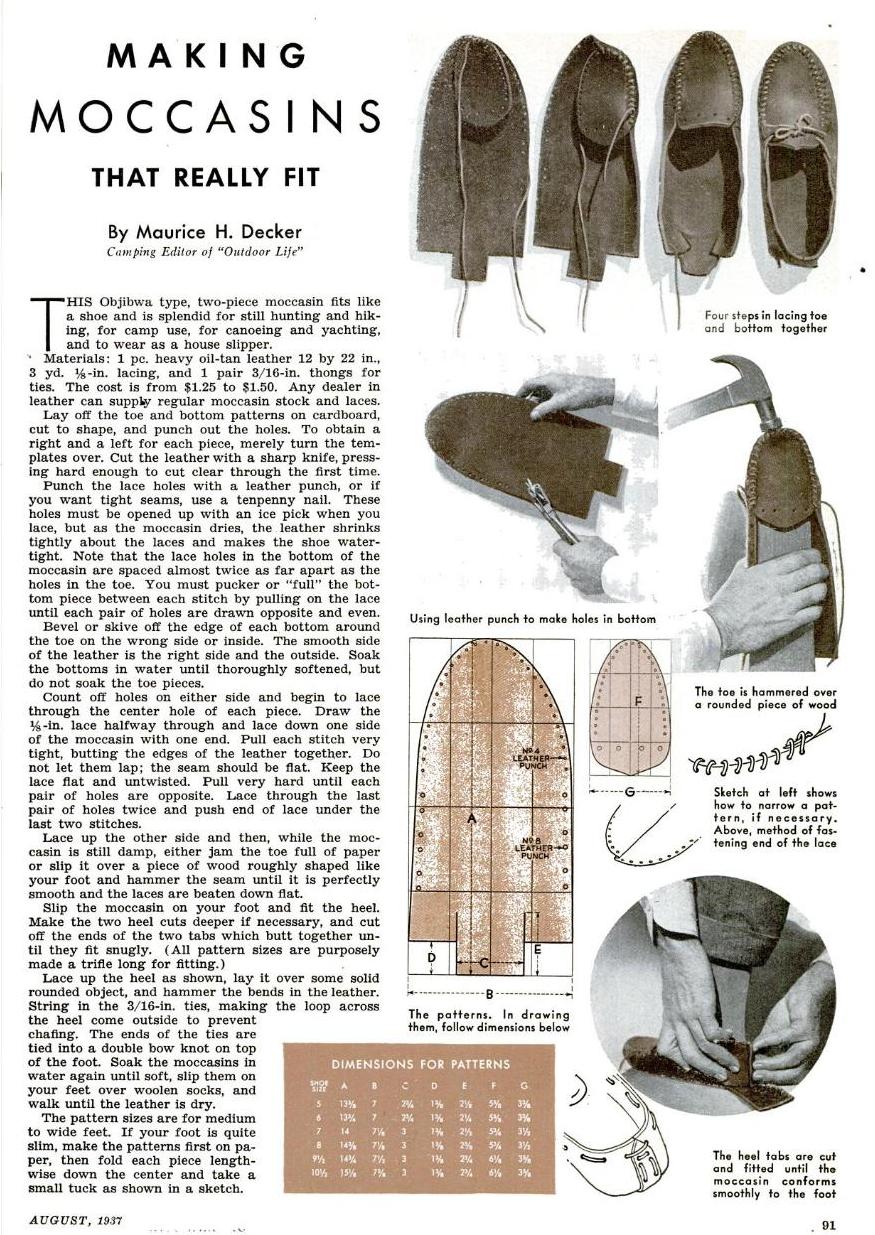
Moccasins


Tefillin - Technically, this is Robin's project, but it was my idea. This is the project that is least likely to be completed. Making tefillin is pretty complicated...


Wallet - This is what I'm working on right now. I'm actually heading over in 45 minutes to finish it up. A simple, very basic card holder/wallet. We'll see how it turns out.


Machete and Sheath - These are my Dad's, from his time in Colombia. I have memories of sneaking into my Dad's closet when I was a kid and playing with his machetes and Colombia kitsch. This doesn't look too hard to make, so I'm going to give it a shot. I think it would be a badass wedding gift, maybe with some colorful Guajira fabrics tied on, but Robin disagrees. She thinks that we should buy gifts off the registries.


Briefcase/ Messenger Bag - Cesar already has a couple of bags similar to this one, so I'll probably just copy his designs ather than try to recreate this one off the Internet.


Bike bag - This one looks pretty doable and practical. Biking in Bogotá can be done, but with the never-ending monsoons and psycho drivers, it's a little dangerous. I share a bike with our roommate, but I only take it out on Sunday mornings, during the Ciclovía.


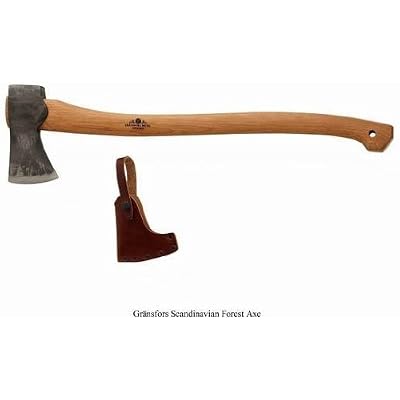
Axe head cover - If someone wants to buy me an axe, I'll make the case. Deal?
I

New Roommate

So, the third bedroom in our apartment has been something of a merry-go-round. We've had one Gringa, Lee, who sadly left us after about 3 months to return to her job in D.C. After Lee, we had Lizette, a Colombian expat who returned to Bogotá after 10 years in Europe to do some research for her thesis. Then my Mom came and lived in the room for 5 days.

We were out of options. Two brits had responded to our posts, but their interest was lukewarm, and they backed out. Thankfully, finally, we found someone. She's Colombian, from Baranquilla, and the BEST part is that she works for SAB Miller, the multinational beer conglomerate. She gets free beer. Seriously. This morning she asked if we wanted to go with her to the office (2 blocks away) to pick up a couple cases. AMAZING - Best. Roommate. Ever.

Tuesday, May 17, 2011

Bad-ass barbers

So, I finally found someone to cut my hair who does a better job than my Mom. There's a little hole-in-the-wall barbershop a few blocks from our apartment, run by a set of twins who're probably in their late 40s (they also both have my brand of male pattern baldness). While I was getting my hair cut by one twin, his brother was reading an article from El Tiempo about this man. Apparently he's famous even in Colombia. The article was ridiculing him for being full of shit, and I happily agreed. Discussing the Republican presidential primary while getting your hair cut for $3 in Bogotá. Amazing.

Tolochko-san

Naming conventions in Colombia are slightly different from what we're used to. Here, people have two first names and two last names. People also use their first two names interchangably - it's still unclear to me if there are any kinds of general trends. Whether pepole tend to use their first name with their family and close friends, their second first name at work/later in life, etc.

Either way, whenever Robin or I are waiting to be called into someone's office, we are almost always called by our middle names. My guess is that it's because, for a Colombian, Carol and Jack are easier to pronounce than Robin and Jerome.

Today though, something truly wonderful and Colombian happened to me. I showed up to the doctor's office, and after waiting for 30 minutes to be called into the office after my schedule 10:10 appointment time, asked the other people waiting around what was up. One woman looekd at my appointment slip and said that my name had already been called, but the doctor, unable to pronounce my name and convinced that my last name must be Japanese, just yelled out, "Chino! Chino? Chino!" Hence the confusion.

Friday, May 13, 2011

Insight into Colombian Healthcare

Through the help of a family friend, Jerry and I were able to sign up as independents within the Colombian healthcare system. We pay roughly $35/month for both of us, and our co-pays are only $1. I must admit, we are somewhat cheating the system - we applied as people who make minimum wage, keeping our costs down. But hey, that's what happens when you have connections.

It has been interesting getting to know a system that is completely different from the US. Appointments are hand-written in a book. Jerry reminds me it wasn't that long ago when it was like that in the US. When I called to try to schedule an appointment a month ahead of time, they wouldn't let me - "our calendar doesn't go that far into the future." So different from needing to schedule appointments in the US up to several months in advance. On the other hand, it means that there is usually no problem scheduling a same-day or next-day appointment.

One wonderful thing about our health insurance (I can't speak for the whole system, only for my experience) is that birth control is free. $0. I have to go once a month to the nurse to check in and make sure everything is going OK and pick up my birth control pills. For me, a monthly check-up isn't exactly necessary considering I've been with the same stable partner for years, and at first I was annoyed to need to schedule appointments every month. But for those women and girls who have no one to talk to honestly about their sexual activity and birth control, it's actually pretty brilliant. Not to mention, if all it takes is 10 minutes a month for free birth control, I'll take it.

The other day I went for my monthly appointment and ended up asking the nurse tons of questions about women's health in Colombia. She told me that abortion is illegal here, except in the cases of rape (she specifically mentioned rape of minors) and if the baby/mother is seen to have major problems within the first trimester. She quickly added that, of course, there are casas (houses) that perform abortions, many of them in that same neighborhood. Pregnancy amongst young teenagers (13, 14, and 15 years old, and as young as 11 or 12) is not uncommon. According to this nurse, amongst some poor populations where the teen pregnancy rate is very high, many young women choose to have kids at a young age because they don't want their children to view them as old. I had never heard such a point of view before and my jaw dropped. She talked extensively about how the strong influence of the Catholic Church in Colombia (and elsewhere) prevent the promotion of real sex education and the legalization of abortion.

On top of all of this, a scandal within the Colombian healthcare system has recently unfolded with our insurance company, SaludCoop, as a central player. In order to explain it to you, first you need to know a little bit about how the healthcare system works (according to Mauricio, one of my English students who gave me the run-down today). There are 4 main actors: 1) The patients, 2) The service providers, 3) The insurance companies, and 4) A government fund established in 1993 that subsidizes healthcare throughout Colombia. Patient goes to service provider to receive treatment. Service provider bills the insurance company. Insurance company gets reimbursed from the government fund.

The scandal (at least as far as my understanding goes - hell it'd be hard enough to understand a scandal like this in the US in my native language and in my own culture) is as a result of the insurance companies telling the government fund that they paid a lot more than they did, and thus getting reimbursed for way more than necessary. AKA money going directly to someone's pocket. According to Mauricio, some guy within the insurance company and some government official had been doing dirty deals together - which is bad enough - but on top of that, they then started a business together to counsel insurance companies on how to ask the government fund for reimbursement. Some people are going to jail, but who knows if things will change.

Mauricio explained that people like him (with money) pay more and subsidize people who can't contribute much or anything to the system. He agrees with that practice, in theory, but with all the corruption that exists, it's not actually effective at providing people with the best treatment.

He then asked me to explain to him how the healthcare system in the US works, and I realized that I know next to nothing about the new healthcare law, except for that some of my friends could now be on their parents' insurance again. And you can't deny someone coverage due to pre-existing conditions. I think now I need a student in the US to sit me down and explain the system to me in layman's terms.

Tuesday, May 10, 2011

Guest blog post: Cindy Tracy

Jerry's mom, Cindy, came to visit us for five days last week. I was impressed by her Spanish and loved seeing how excited she was to be in Bogotá with us. This lady worked non-stop for 3 days and only on Shabbat did she rest! Without further ado, here's Cindy with reflections on her trip:

I was fortunate enough to be invited by ProExport Colombia (a government agency that helps Colombian companies export) to the Feria Internacional de Libros – a huge book fair. They paid for my plane ticket and helped me arrange appointments for the first 3 days of the book fair.

We arrived at their apartment in time to drop my bags and walk to the little mercado about 1 minute from their apartment before it closed for the day. Though small, it has a great variety of fruits and vegetables, some familiar, but many new fruits (I have absolutely been amazed and delighted by the new fruits I have tasted here). That night, we hung out, admiring the great view of the city from their apartment.

6:45 Wednesday morning, my taxista was thrilled that it was my first trip to Bogotá and that I spoke Spanish. He explained that the corrupt mayor had begun all these construction projects and then the bribes, corruption, etc. came to light. There is construction EVERYWHERE. I learned immediately NOT to watch how the taxistas drive!

At the book fair, I had table # 116 and from 8:30 to 6:00 pm, had 40 minute appointments arranged. There was one 20 minute break in the morning, an hour and a half for lunch and one 20 minute break in the afternoon. Only 2 appointments did not show up, which gave 2 TV stations and ProExport a chance to interview me. It seems I was the only American there that could speak fluent Spanish. Of course, before the cameras rolled they each asked me questions to make sure my answers would be favorable!

At the end of the day, I exited the front of the book fair to catch a cab back. After watching cabs whizz by, I approached this group of young policemen and in Spanish, said “Excuse me, I am an American, is this not the right place to get a taxi? None are stopping.” One of them said, No, this is the place to hail a cab and one of the others said, “He does not know anything because he is from Cali”. They were hilarious and helped me get a cab.

The cabs work in an interesting fashion. The meter displays a number, like 102 and every cab has a laminated sheet that tells you how much the fare is for that number. Jerry told me to ask for the sheet, so they would not overcharge me. I was so happy that the cab drivers were so nice and eager to talk, I never did – so I never paid the same fare twice! They never overcharged me much – the most I paid was 9000 pesos (about 1800 pesos to the dollar).

I had been worried about the effect of the altitude, but am happy to say it never slowed me down! I was also worried about “Montezuma’s revenge” but even drinking the tap water I didn’t have any problems. I think Jerry was surprised that I could keep up with them!

The book fair is HUGE – 6 enormous buildings with dozens of booths in each building. I was very tired by the end of the day, but had great appointments with interesting publishers, and most had never tried to export to the U.S. before.

Thursday for lunch, this publisher took me to a restaurant known for typical food from Medellin – Restaurante Poblado. He explained that we should not get an appetizer because the portions are quite large. I had the daily special – Perchugo – chicken, turkey, sausage, corn, potatoes, etc. – SO MUCH FOOD – I left half of it.

Thursday night, Jerry and Robin made an amazing carrot and ginger soup and a quinoa salad and of course, more delicious fruit. Besides uchuvas, I love pitaya and feijoa and guanabana!

Friday was the last day for me at the book fair. Jerry got me 700,000 pesos to spend on the books I needed to buy. I could not resist these adorable “libros en tela” – cloth books in Spanish I plan to sell.

But no more business talk, Friday night when I got home we went out to a restaurant they had been wanting to try. It was good, but the main course was as big as the tapas, and twice the cost – so we decided it was okay, but not great. They also tried to give me bottled water instead of “agua de la llave” (tap water) – which Robin caught!

Saturday morning they took me to the flower market which was amazing. These that we bought were really unique. The yellow ones are called “manitos de oso” (little bear claws).

Then we went inside the regular market. You could get lost so easily, it is SO big!! How many markets in the U.S. have a guy go by with an entire pig on his back and then the next stall has dozens of live chickens – ready to chop off their heads!

Then I had an experience most visitors to Bogota do not have. I went to the dentist. When Pat was in Colombia for the Peace Corps 40 years ago, he became friends with Hernando Acosta, who is now a dentist in Bogotá. I was nervous about going to a dentist I had never met before, and Jerry saying “His office is in a nice part of town, so he should have modern equipment” did not comfort me much. However, he did a great job, and because of his relationship with Patrick, refused to charge me anything.

After the dentist, we walked up through a lovely park

and Jerry showed me the Orthodox synagogue. Then he took me on a bus, explaining that he would let me get on first to find a seat since the driver does not wait until you are seated to start moving. After a couple of blocks, a young boy gets on the bus with plastic flowers and begins to sing. He does that for several blocks before getting off and several people give him a few coins.

At 3 pm, we were expecting Luis’s family to come over, but they came over early - so un-Colombian! When Pat was in the Peace Corps, Luis, as a boy of 10 or 12 years old, was his helper. Pat stayed in touch with him all these years, sending him money now and then to help him. When Pat was here in March, he had an emotional reunion with Luis and his family. Luis came with his wife, Hermina, their daughter Sandrita and her son, Sebastian, and their daughter Marcela and her adorable 2 year old son, Samuel. We had a wonderful time eating and talking.

Then we walked the 5 minutes to the movie theater to see Water for Elephants. Jerry packed up some fruit so we could have a free snack during the movie. The theaters here offer assigned seats. It is an EXCELLENT film and of course, I cried throughout the whole thing – typical for me. We walked back, switching to Spanish just so people would not think us tourists, but it was early and there were a lot of people walking around.

They live in a GREAT neighborhood, La Macarena, with restaurants, shops, movie theater, etc. all within walking distance.

Sunday morning was my last morning. I set my alarm so I could spend some time with Robin before she went to Ultimate Frisbee practice. She enjoyed the last of the Cheerios I had brought her (take note if you are planning to visit Jerry and Robin – bring her a box of plain Cheerios). Jerry took me to the Sunday Flea Market only 5 minutes away. In the U.S., you want to get to the flea market early, before the good stuff is gone. We got there about 8:30 and people were still setting up. Jerry bought me a cup of jugo de guanabana which is one of the most delicious fruit juices!

There was everything at this market from clothes, to typewriters and old sewing machines, jewelry, etc. I found an awesome hand painted shirt for Mitchell and a hat for Pat – he usually wears a cap or hat when he walks the dogs.

All too soon it was time to catch a cab for the airport.

One final Colombian culture thing for my blog entry before I leave. When I checked in, they informed me that I had been “chosen” to have my bag searched. Fortunately, he did not seem to mind the big bag of cinnamon sticks and did not find the jar of homemade blackberry jam I am bringing back with me.

Now, back to the U.S. Hope you have enjoyed my guest post!

Sunday, April 24, 2011

El Cocuy, Part I: Journalings

Returned to Bogotá this morning on an overnight bus. We weren't sure that we would be able to make it back from Güicán, the town where the trail ends. There is horrible flooding all over Colombia right now and many major roads have been damaged. Let's hope that the rainy season, or winter (invierno) as it is called here, is quieter than predicted.

While Jerry uploads our photos, I thought I'd give a preview of our trip in the form of some of my writings from the trip.

Sunday, April 17, 2011
We arrived yesterday to El Cocuy and registered with the National Parks Service, bought some last-minute supplies, and were on our way. We caught a ride to the farm of Miguel Herrera. He possibly has the best mustache I've ever seen. He also fits the stereotype of a Boyacense (note: Boyacá is the department, or state, that the park is located in) campesino - brownish/black hat, ruana, and extremely nice and polite. Andrés negotiated with Don Miguel for he and two horses to pick up our packs the following day and carry them to our next destination. After leaving Don Miguel's place, we walked about an hour and a half to the first campsite. It proceeded to rain while Jerry and I napped.

It rained the entire night - and, as it turns out - our tent is no longer really waterproof. Luckily, even though the entire tent was wet, our sleeping bags stayed (mostly) dry. Jerry is the best husband in the world - he let me have the best sleeping pad and sleeping bag. I guess we'll see if that continues (editor's note: he ended up with the good sleeping pad, I took the good sleeping bag. He's still the best husband in the world.)

Tuesday, April 19, 2011
Today I heard a plane pass by overhead, and it seemed so out-of-place. Over the past two days, the only sounds that I've heard are the running streams, rain dropping on our tent, the occasional bird, and the voices of Jerry, Andrés, and Paula. Plus the sounds of zippers, the gas stove, waterfalls, footsteps, and most of all, my own breathing. This is hands-down the hardest thing I've done in my life. And the best part is that I've loved it - despite the fact that our tent isn't really waterproof, that my body aches (though not as much as I thought it would), that every time we go uphill I have to concentrate more than I ever have on breathing. Being able to see views that few have seen - these views are literally breathtaking. In one direction there is a steep, red canyon wall, in another a steep, green valley leading to the end of the world, and I am standing on a practically vertically cliff made of gray shale. My brain begins to doubt my eyes. You have to look quickly and stop to admire it while you can, because you can see the fog creeping in. But that, too, is amazing in itself - even though I curse the clouds for stealing my view - to watch the water take shape and gather together and climb towards us. We are so high, we have beaten the clouds, we are above them, they have to catch up (and they do).

This mornign we woke up to a clear, dawn view of a recent snow drift on the mountain next to our campsite. As the sun rose over the eastern mountains, this mountain northwest of us changed colors and seemed to change shape. We couldn't feel our toes. I asked Paula if this was the coldest she'd ever been in her life and she said yes.

I love that Jerry and I continually push each others' limits, we support each other to become better versions of ourselves.

But, at the end of the day, only I can put one foot i front of the other and get to the top of that pass. I am focused on that next step, that next breath, survival. No one can do that for me.

I love this feeling of accomplishment, unlike any I've felt before. I am my own refrigerator, my own transportation. I am my own mule (OK, Jerry carries the tent). I am seeing things that can only be seen by foot. No horse can go up 200 meters in altitude over gigantic boulders left behind by glaciers. No bike can traverse miles of going up and down cliffs. No car can cross a waterfall barefoot.

Yesterday, we saw the edge of the world. We saw where Laguna La Plaza funnels into a short waterfall and then empties down into a vast nothingness. And beyond the nothingness are more mountains and mist.

We collect our water from the streams, rivers, and waterfalls that form in the mountains, that melt from the glaciers and are fed by rain. I've never tasted fresher water (and no, we didn't use any water purification tablets). Every time we see a different glacier, my heart aches for our children who will probably never see one.

Jerry and I recall the geology we learned that first summer together, also in this tent. We point out the glacially-carved U-shaped valleys and the river-created V-shaped ones. We pass over granite and shale and see sandstone cliffs. Or so we think, and who is here to tell us otherwise?

The days are beginning to become routine. Wake up at 4:00am, pack up and eat, leave camp by 5:30 or so. Hike. Drink water. Hike. Eat trail mix. Hike. Take photos along the way. Feel like you can't continue. Continue anyway. Arrive at campsite by 12:00 or 1:00pm. Eat lunch. Rain. Nap. Talk with Jerry for hours. Rain. Asleep by 7:00pm. Repeat.

Friday, April 15, 2011

El Cocuy, the preview

A few months ago, our friends Andrés and Paula mentioned the idea of doing a 9-day hike through El Cocuy, a national park located about 12 hours from Bogotá high in the eastern range of the Andes (in Colombia, the Andes mountain range divides into 3 "fingers"). The last time I backpacked was almost 5 years ago in Peru for three or four days. Jerry has never backpacked. We will be carrying all of our food and camping gear for the whole trip. And we'll be hiking at over 4,000m (roughly 14,000 feet) the entire time. Needless to say, I'm a little nervous, but seeing the photos convinces me that this is an adventure worth doing. I'm looking forward to some quiet, beautiful vistas, and spending time with my husband and good friends. Not to mention, I'm excited about the challenge itself and the hot springs we'll reach at the end. And if I don't do something like this now, when will I?
We'll report back when we get back to Bogotá.

Thursday, April 14, 2011

Tuesday, April 12, 2011

Mercy Corps debrief

Hey y'all,

Sorry it's been almost a month since our last post. I was busy with finally working a 9 to 5, Alice came to visit, Robin went to the U.S. for Carlyn's wedding, etc., etc. So, enough with the apologies, time to start with the updates.

The consulting gig with Mercy Corps went really well. It was interesting to work for an NGO after so much time with a defense contractor. Some differences: no worrying about classified material, actual field research before writing a proposal, much less of a focus on monitoring and evaluation, no psycho boss. Though I was expecting, it the thing that really struck me was the similarities. At the end of the day, it's the same 9 to 5 grind as any other job, with coworkers, bosses, a little kitchen, and, best of all, the commute. Fortunately, the work was interesting, and I got to learn a lot about a region of Colombia that we visited with Evan but barely explored, La Guajira. We'll definitely make it back before we leave Colombia, whenever that ends up happening.

At the end of the three weeks, I turned in a damn good proposal, turned in my computer, and said goodbye. It was fun while it lasted, but I won't lie and say that it wasn't nice to go back home, bake some bread, and make some dried mango and beef jerky in preparation of our trip to El Cocuy. Who knows, maybe they'll need some proposal writing support again soon and I'll be conscripted back into their ranks. Until then, it's back to teaching English.


P.S. Whoops, almost forgot. Haven't spent any of the money yet (haven't actually received it yet, either), but I think we're going to blow it on Lasik, the flights back to the U.S. in August, and a new computer.

Tuesday, March 15, 2011

Jobs

So, as Robin's already mentioned, we're teaching English now, about 15-20 hours a week. Unfortunately, if you factor in Bogotá traffic, the 7 AM start time, and the 8 PM end to the work day, the life of a mercenary English teacher in Bogotá doesn't seem quite so glamorous. Still, the schedule's flexible, the job's easy, and it pays a very good wage, relative to what most people make in Colombia.

Starting yesterday however, I've been taking a working sabbatical from my English-teaching sabbatical. Until the end of the month, I'm going to work as a peace profiteer and help the local Mercy Corps office write a State Department proposal. In addition to going back to regular 40-hour work weeks, I'm also making twice as much as I was teaching English. Cheers to having a little bit of extra spending money.

Speaking of, what should we do with these extra funds? Invest in an herbal Coca tea export company? Pay for Lasik eye surgery for Jerry? Have a second wedding because it was so much fun the first time?

Leave your suggestions in the comments...

Monday, February 28, 2011

Hat Shopping in Bogotá

As many of you already know, the hair on the top of my head is quickly disappearing - down drains, on pillow cases, on the shoulders of many shirts and blazers, etc. So long as my haircuts only cost $2, I'm OK with postponing the inevitable permanent buzzing of my hair. However, when that day does come, I'm going to have to start investing in some head coverings. Fortunately, quality hats in Bogotá are much cheaper than in the United States - everything from berets (the normal kind, not the velour ones with crazy stripes and pins), straw hats, fedoras, and beautiful "Colombia es Pasión" visors.

Here's a picture of my lovely wife demoing the visor:


And another of my Dad, looking like a badass:


In any case, if you have any suggestions of what might look good on me (you can use the picture below if you'd like to have me virtually model any styles), leave it in the comments.
Stay tuned for updates.


Wednesday, February 23, 2011

Mind the gap

As I believe we've mentioned, Jerry and I have started teaching English to sustain our life here in Bogotá. Between the two of us teaching roughly 20-25 hours per week, we make enough to live off of. We work for a language institute that has contracts with businesses and individuals. We generally teach in the mornings before people go to work (starting between 6:30-7:30am) and sometimes during people's lunch breaks or after work as well. Though waking up early has been an adjustment after our several months of sabbatical, it is wonderful to be home by 9:00 or 10:00am with the whole day ahead of us and with some money-making hours already under our belts.

Most of my students are "intermediate," meaning that they have a grammatical and vocabulary base in English, but don't always know how to express themselves and don't understand everything I say. They often understand almost everything in written form, but the same sentence spoken aloud is incomprehensible. So, I have been working a lot on listening - me talking or reading an article aloud, or watching a TED Talk or other video together - and then making sure that the student understands what's going on. This usually leads into a discussion so the student also works on speaking and building up their confidence in English, which I have found to be one of the most important things that we work on in class.

But Ivan falls squarely into the "beginner" category; I am Ivan's first English teacher. He works for Colombia's equivalent of the Small Business Administration (Patricio, I feel like you especially will appreciate that) and aspires to become the head of the organization one day. Of course, part of the job description is fluency, or at least competency, in English. That's where I enter the picture.

And then there is Sebastián, the 12-year-old grandson of Luis (who Pat talks about in the previous post). I helped him with his English homework a couple of times, which he has been taking in school for a year or two.

The learning gap between a 40-something highly educated man and a 12-year-old public school educated boy was staggering. Sure, theoretically young people pick up languages more quickly - but from my limited exposure to these two people from very different parts of Colombian society, it would be much easier for Ivan to reach a passable level of English.

Though Ivan's grammatical and vocabulary base in English is limited, he has been exposed to English - he has traveled to the US, he has surely interacted with foreign businesspeople. Not to mention which, he has learned how to learn. When I say, "this is an adjective" or "this word can be both a verb and a noun" or if I speak slowly in simple terms, he understands.

Sebastián, on the other hand, had a homework assignment to write 10 English adjectives. Well, he wrote the first 8, copying them from a page out of his workbook. I made him pronounce the words with me and ensured that he understood what he was saying. When I asked him to write two more adjectives, I quickly realized that he had no idea what an adjective was. Which led me to explain the concept of nouns, verbs, and adjectives. He has never been taught how to learn or think critically; he has only been taught to complete the pages in his workbook and do what he is told. On top of this, he doesn't understand a single word I say in English because in school, this is how the typical English class goes:

Teacher: "Good morning, class." (with heavy Colombian-accented English)
Students: "Good morning, teacher."
Teacher: "How are you?"
Students: "Fine, thank you. How are you?"
Teacher: "Fine. Ahora, por favor miren la página 16 y hagan los ejercicios." (Now, please turn to page 16 and do the exercises.)

Colombians are required to learn English. However, the average public school student in Colombia does not learn English from anyone with a base knowledge of the language, but rather goes through rote motions of completing written exercises without actually absorbing anything.

So for now, I am making a living off of people like Ivan. I have offered to give Sebastián free English lessons as long as his family brings him to our apartment. The family seemed excited and understands that it's important. But, like many situations in Colombia, people often say they will call and do things and then it never happens. We shall see.